
A Comprehensive Comparison of Spur Gears and Bevel Gears for Industrial Applications
Understanding Spur Gears and Bevel Gears
Within the realm of mechanical engineering, gears play a fundamental role in the transmission of power and motion. Among the various types of gears, spur gears and helical gears are widely utilized in industrial applications. This guide provides a formal comparison of these two types, focusing on their core working principles, structural differences, and performance metrics.
Core Working Principles and Structural Differences
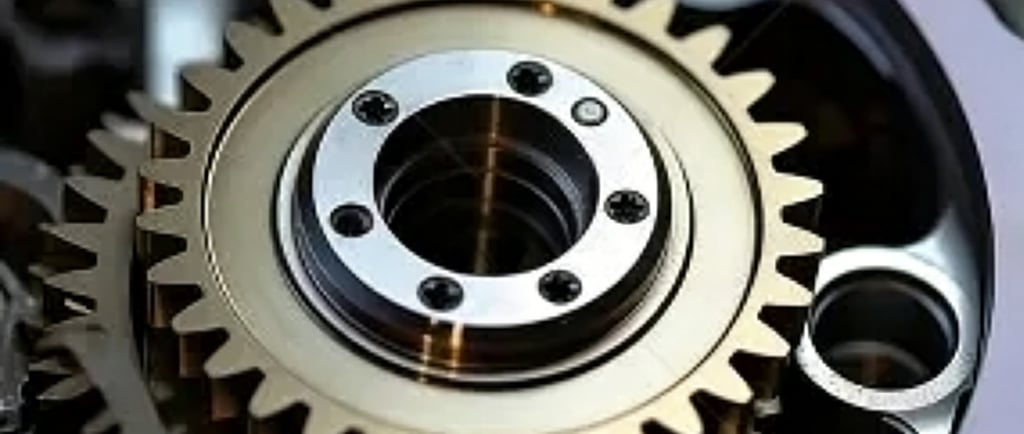
Spur gears are characterized by their straight teeth that are parallel to the gear axis. This design allows for the straightforward transfer of motion and torque between the gears. Conversely, bevel gears, often used for transferring motion between shafts that are at right angles to one another, have angled teeth that provide efficient transmission in such configurations.
The fundamental working principle of spur gears involves meshing gear teeth that engage directly, resulting in a single point of contact. Bevel gears, however, involve a conical shape that facilitates multi-point engagement, which can lead to more complex interaction but better load distribution under certain conditions.
Performance Metrics: A Side-by-Side Comparison
When evaluating spur gears and bevel gears based on key performance metrics, several factors come into play:
- Load Capacity: Spur gears are generally better for high torque applications, while bevel gears excel in applications requiring versatility at various angles.
- Transmission Efficiency: Both gear types demonstrate high efficiency, but spur gears tend to have lower losses due to their simpler design.
- Noise and Vibration: Helical gears, which are often confused with bevel gears, produce less noise due to their gradual tooth engagement.
- Axial Thrust: Helical gears create axial thrust that must be managed, while spur gears do not present this complication.
- Speed Range: Bevel gears can efficiently transmit power at varying speeds, while spur gears are more suited to lower speeds.
- Manufacturing Complexity: The production of spur gears tends to be simpler and more cost-effective compared to the intricate design of bevel gears.
Application Guidance: When to Choose Which Gear
Choosing between spur gears and helical gears hinges on specific operational requirements. Spur gears are ideally suited for low-speed, low-cost applications where simplicity is paramount, such as in conveyor systems or standard machinery. In contrast, helical gears are preferable for high-speed, heavy-load applications where noise reduction is crucial, including automotive transmissions and industrial reducers.
In scenarios where the two gear types might be confused, understanding their mechanical advantages is critical. For instance, while both can serve in parallel applications, the axial thrust issue inherent to helical gears must be addressed through careful design considerations.
When selecting gears, engineers should consider practical design tips, including incorporating bearings or specialized mounts to mitigate axial thrust in helical gears. This approach will enable reliable performance while maintaining necessary operational standards.
In conclusion, understanding the differences between spur gears and bevel gears is crucial for effective design and operation in a variety of industrial settings. At Hangzhou Ocean Industry Co., Ltd., we specialize in manufacturing high-precision spur and helical gears, offering tailored solutions that meet diverse industrial applications and requirements.
Quality
Expert gear manufacturing with 20 years experience.
GET IN TOUCH
Tel:+86-571 88065675 | +86-571 88842852
E-mail:oceanindustry@vip.163.com
Fax:+86-571 88844378
Address:4th Floor, Block 2, Qianjiang Century Industrial Park, 2327 Hongning Road,Ningwei Town,Hangzhou, China
© 2005. All rights reserved.