
Exploring Spur Gears: Principles, Benefits, and Applications in Industrial Machinery
Introduction to Spur Gears
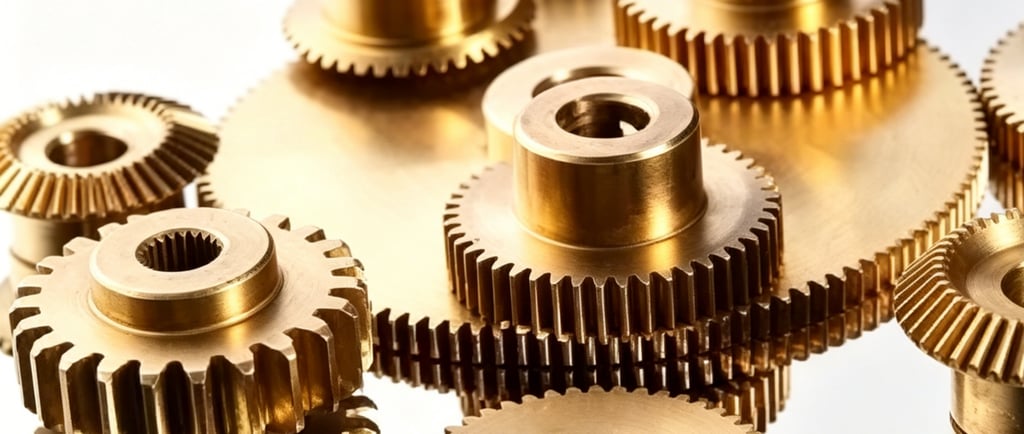
Spur gears are a fundamental type of mechanical component widely utilized in various industrial machinery and systems. Defined as cylindrical gears with straight teeth that are aligned parallel to the axis of rotation, spur gears transmit motion and power between parallel shafts. Their straightforward design contributes to their popularity; they are easy to manufacture and can be efficiently integrated into a range of mechanisms.
The primary function of spur gears is to change the speed and direction of motion in mechanical systems. When one gear rotates, it engages the adjacent gear, producing synchronized rotational movement. This transmission of motion is crucial in numerous applications, including conveyor systems, automotive transmissions, and industrial processing equipment. Their ability to generate high torque and maintain efficiency even at high speeds makes spur gears indispensable in the realm of mechanical engineering.
Common applications of spur gears can be found across various industries. For instance, in manufacturing plants, they are integral to machinery that requires precise and reliable power transmission. In the automotive sector, spur gears assist in transferring power from the engine to the wheels, enabling effective movement. Additionally, they are used in robotics and packaging machinery where precise movement is essential. Understanding the function and characteristics of spur gears is paramount for design engineers and procurement managers. By comprehending how spur gears operate and their various applications, professionals can select the appropriate types for their specific requirements, ensuring optimal performance and reliability in industrial settings.
Working Principle and Basic Structure of Spur Gears
Spur gears, a fundamental component in mechanical systems, operate based on precise meshing between their teeth. This meshing facilitates the transfer of torque and rotational motion from one gear to another, ensuring synchronous movement. The primary working principle revolves around the interaction of the gear teeth, which engage smoothly to transmit force, thereby increasing efficiency in mechanical operations. The design and configuration of these gears allow for minimal frictional losses, enabling effective torque transfer and speed reduction in various applications.
At the heart of the spur gear's functionality are parameters such as pitch diameter, pressure angle, and tooth count. The pitch diameter defines the effective diameter at which the gears engage, influencing the gear ratio and subsequently the velocity of output shafts. The pressure angle, on the other hand, affects how the gear teeth interact during meshing, playing a crucial role in the gear's load-carrying capabilities and efficiency. Typically, common pressure angles are 20 and 14.5 degrees, each suited to different applications based on torque and speed requirements.
The tooth count is another vital aspect, impacting the gear ratios and the overall size of the gear. This count determines how many teeth will engage during rotation, affecting the torque output and the smoothness of operation. Increasing the tooth count allows for more gradual engagement, which can lead to quieter operation while moderating the loads experienced during operation.
In practical applications, illustrations and diagrams of spur gears often depict these features, demonstrating how the integration of these parameters contributes to overall gear functionality. By prioritizing adequate alignment and engagement, spur gears remain essential in various industrial machinery, facilitating the reliable transfer of power across diverse mechanical systems.
Advantages and Limitations of Spur Gears
Spur gears are widely recognized for their various advantages in the realm of mechanical engineering and industrial machinery. One of the primary benefits is their efficiency in power transmission. The straightforward design of spur gears allows for a high degree of mechanical efficiency, typically around 95% or more. This efficiency is crucial in applications where energy consumption and operational costs are of significant concern.
Another notable advantage is the simplicity in design and manufacturing. Spur gears have a basic structural composition, making them relatively easy to produce. This simplicity translates into lower production costs, as manufacturing processes can be highly automated and quality control can be more straightforward. Given these factors, spur gears are often produced in large quantities, further driving down costs and ensuring availability.
However, despite their many advantages, spur gears also come with certain limitations. One major drawback is the inherent noise generated during operation. Due to their design, spur gears tend to produce more noise compared to helical or bevel gears, which can be an important consideration in applications where noise reduction is critical.
Additionally, spur gears have limitations in terms of load handling capabilities. While they can handle moderate loads effectively, they are less suited for higher torque applications compared to other gear types. This is largely due to the direct contact between the teeth of spur gears, which can lead to increased wear and potential failure under excessive loads. Furthermore, spur gears can experience higher stress concentrations, which may compromise performance over time.
In conclusion, spur gears offer significant advantages in efficiency, design simplicity, and manufacturing ease, making them a popular choice in many industrial applications. However, their limitations in noise generation and load handling capabilities warrant careful consideration when selecting the appropriate gear type for specific mechanical systems.
Manufacturing Processes for Spur Gears
Spur gears are integral components in countless mechanical devices, and their manufacturing processes play a crucial role in ensuring precision and performance. The primary methods of producing spur gears include CNC hobbing, shaping, grinding, and heat treatment, each of which has its advantages and specific applications.
CNC hobbing is a highly efficient method used for manufacturing spur gears. This process utilizes a rotating cutting tool known as a hob that simultaneously cuts the gear teeth and shapes the gear blank. One of the primary advantages of hobbing is its ability to produce gears with a high degree of accuracy and surface finish while maintaining relatively short cycle times. However, it may not be suitable for all materials, particularly those that are too hard or brittle.
Shaping is another widely used technique for gear production. In this method, a cutting tool moves linearly across the gear blank to create the desired tooth shape. This process is particularly advantageous for smaller batch production or when dealing with intricate gear tooth geometries. However, shaping can be time-consuming compared to hobbing and may not yield the same level of surface finish.
Grinding is often employed as a finishing process to enhance the accuracy and surface quality of the gear teeth. This method uses abrasive wheels to remove small amounts of material, ensuring that the gears meet tight tolerances. While grinding significantly improves the surface finish, it generally involves higher operational costs and longer cycle times compared to other methods.
Heat treatment is generally conducted post-manufacture to enhance the mechanical properties of spur gears. This process can increase hardness and improve wear resistance, although the risk of distortion during heat treatment must be carefully managed. Selecting the appropriate manufacturing method for spur gears is essential, as it directly influences their performance, longevity, and operational reliability in industrial machinery.
Material Selection for Spur Gears
When it comes to manufacturing spur gears, the selection of materials plays a critical role in determining the performance, durability, and efficiency of the gears in various industrial applications. Several materials are commonly used in the production of spur gears, each with its own unique properties and advantages.
Carbon steel is one of the most frequently used materials for manufacturing spur gears. This material is known for its excellent strength and hardness, which can be further enhanced through heat treatment processes. The rigidity of carbon steel gears makes them suitable for applications involving high loads and significant torque. However, they may be prone to corrosion if not adequately protected or coated.
Alloy steel offers improved mechanical properties compared to carbon steel, including better resistance to wear and fatigue. Alloying elements such as chromium, nickel, and molybdenum are added to enhance toughness and hardness. This makes alloy steel a preferred choice for high-performance spur gears, especially in demanding environments or applications where longevity is essential.
Stainless steel is another material option, renowned for its corrosion resistance properties. This characteristic makes it highly suitable for environments where moisture or corrosive substances are present. However, stainless steel gears often exhibit lower mechanical strength than carbon or alloy steels, which necessitates careful design considerations to ensure they meet strength and durability requirements.
Furthermore, plastics such as nylon and acetal are sometimes favored for spur gears in specific applications. These materials are lightweight, resistant to corrosion, and can operate quietly. However, they may not be ideal for high-load scenarios due to lower tensile strength when compared to metal options.
Material selection for spur gears should thus be driven by specific application needs, considering factors such as load requirements, environmental conditions, and maintenance protocols, each presenting its trade-offs regarding performance and cost.
Precision Grades and Tolerance Standards
The performance and reliability of spur gears in industrial machinery largely depend on the precise manufacturing tolerances and grades established by relevant standards. Prominent organizations, including the International Organization for Standardization (ISO), the American Gear Manufacturers Association (AGMA), and the Deutsches Institut für Normung (DIN), have developed specifications that ensure the effective functioning of gears across various applications.
ISO standards for spur gears, notably ISO 1328-1, provide guidance on the classification of gear accuracy and surface roughness. This classification system includes multiple precision grades, which indicate the degree of deviation from ideal gear tooth profiles. Higher precision grades often correlate with tighter tolerances, resulting in enhanced gear performance characterized by minimal noise, reduced vibration, and extended lifespan. Similarly, AGMA standards elaborate on gear tooth tolerances and correlate these specifications with the allowable runout and backlash crucial for smooth operation.
DIN standards also play a vital role, specifically in Europe, where they harmonize gear manufacturing practices. For spur gears, DIN 3965 outlines the essential criteria for tooth accuracy, specifying the acceptable deviations in profiles and total height. The adherence to these tolerance standards is critical, as even minor variations can lead to significant operational issues, including increased wear or premature failure of the gears.
In the selection of spur gears for specific applications, understanding these precision grades and tolerance standards is paramount. Industries that operate in high-speed or heavy-load conditions, such as aerospace or automotive, necessitate gears produced within stringent tolerances to maintain efficiency and safety. Overall, compliance with established standards not only promotes the longevity of gear systems but also facilitates optimal performance in complex industrial machinery.
Common Failure Modes and Maintenance Tips
Spur gears are vital components in many industrial machinery applications, yet they are susceptible to various failure modes that can compromise performance and efficiency. Understanding these common failures is essential for maintenance and extending the lifespan of the gears. One prevalent issue is tooth breakage, which can occur due to excessive load, misalignment, or material defects. Regular inspections can help identify signs of stress prior to catastrophic failures.
Wear is another common issue, resulting from the continual contact between gear teeth. Over time, this can lead to a diminished ability to properly transfer force, resulting in decreased efficiency. It is necessary to monitor gear wear through periodic assessments, focusing on unexpected changes in sound, vibration, or operational performance.
Pitting is also frequently observed in spur gears, often a consequence of inadequate lubrication or inappropriate material selection. Pitting appears as small surface fractures that can gradually expand and lead to significant gear degradation. To prevent this, it is essential to adopt effective lubrication practices that suit the specific operational environment and loading conditions.
To mitigate these failure modes, a proactive maintenance strategy is crucial. Regularly scheduled inspections should be conducted, utilizing techniques such as vibration analysis and ultrasonic testing to catch potential issues early. Furthermore, ensuring proper alignment during installation can prevent undue stress and extend gear life.
Additionally, implementing a consistent lubrication schedule with quality lubricants tailored to the system’s operating temperatures and speeds can drastically enhance performance. It is beneficial to examine the lubricant regularly for contamination or degradation, as these factors may indicate the health of the gear system.
In summary, understanding the common failure modes associated with spur gears and adhering to best maintenance practices can significantly improve their durability and operational productivity in industrial applications.
Selecting the Right Spur Gear for Applications
When it comes to selecting the right spur gear for specific applications, several factors must be considered to ensure optimal performance. Firstly, understanding the operating load is crucial. This includes both the static and dynamic loads that the gear will encounter. The material of the spur gear must also be compatible with the load requirements to prevent failure due to fatigue or wear. Typical materials include steel, brass, and plastic, each offering different benefits depending on the application.
Next, speed is another critical consideration. Spur gears are usually selected for their ability to function effectively under varying speeds, but it's vital to match the gear’s speed rating with the application's specific demands. High-speed applications may require gears designed with precision to minimize vibration and heat generation, while lower-speed applications may prioritize durability over extreme precision.
Environmental conditions play a significant role as well. Gear selection should take into account operating conditions such as temperature, humidity, and exposure to chemicals or dust. For instance, a spur gear used in a high-temperature environment may need special coatings or materials to resist thermal degradation. Similarly, gears that will be exposed to corrosive substances may require corrosion-resistant alloys or coatings.
Best practices for spur gear selection involve conducting thorough calculations and simulations, if possible, to predict performance under specific conditions. Collaboration with reputable suppliers, such as Hangzhou Ocean Industry Co., Ltd., is also advisable. Their high-precision spur gears are well-regarded for quality and reliability in various industrial settings. Ensuring that your chosen supplier has a robust reputation for delivering durable, precisely engineered spur gears can significantly enhance the reliability of your machinery.
Quality
Expert gear manufacturing with 20 years experience.
GET IN TOUCH
Tel:+86-571 88065675 | +86-571 88842852
E-mail:oceanindustry@vip.163.com
Fax:+86-571 88844378
Address:4th Floor, Block 2, Qianjiang Century Industrial Park, 2327 Hongning Road,Ningwei Town,Hangzhou, China
© 2005. All rights reserved.