
Understanding Bevel Gears in Industrial Power Transmission
Introduction to Bevel Gears
Bevel gears are essential components in the realm of industrial power transmission, designed specifically to facilitate the change in shaft direction. Their unique geometry allows for the transmission of power between shafts that are oriented at various angles, typically at 90 degrees. This capability is vital in a broad array of applications, including automotive differentials, industrial machinery, and agricultural equipment.
Types of Bevel Gears
There are several types of bevel gears, the most common being straight bevel gears, spiral bevel gears, and hypoid gears. Straight bevel gears feature straight teeth and are primarily employed for transmitting power between shafts that are perpendicular to each other. However, they often produce more noise and vibration when in operation.
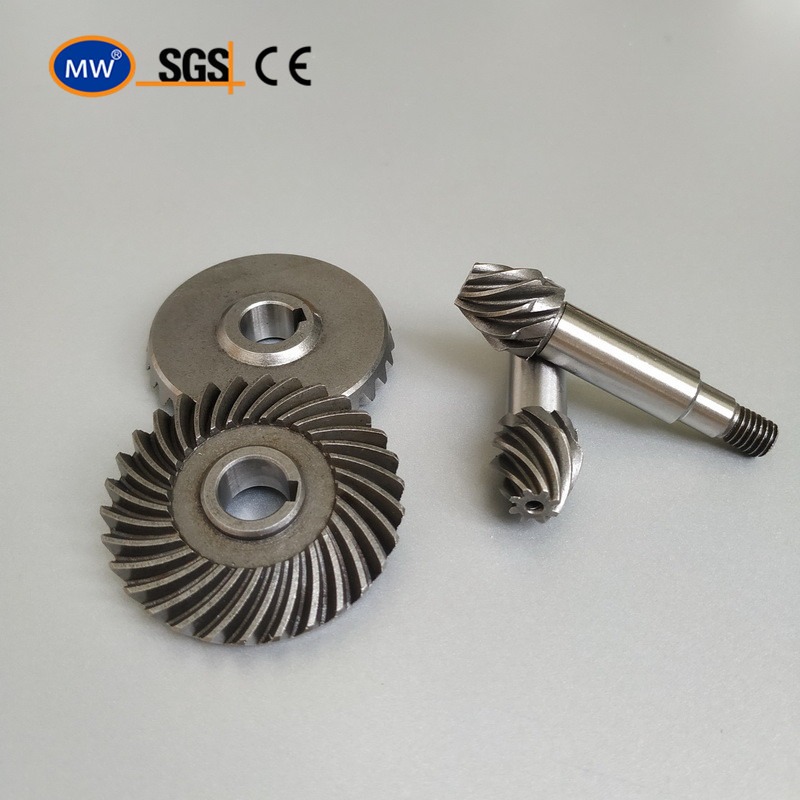
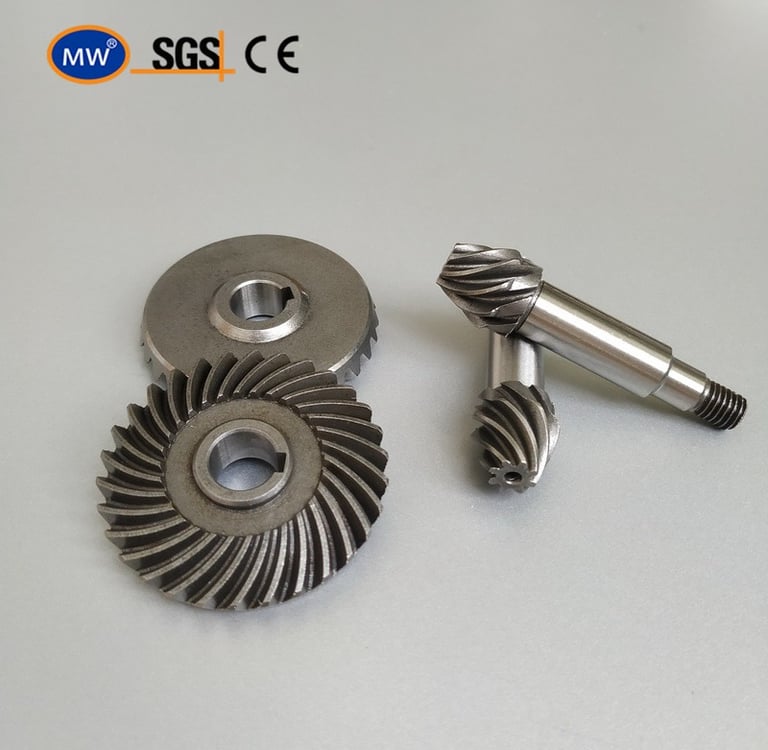
Spiral bevel gears, on the other hand, have curved teeth that allow for smoother operation, reducing noise and increasing load capacity. This design enhances the gear's efficiency and durability, making it suitable for higher load applications.
Hypoid gears represent a more advanced type of bevel gear, offering several key advantages. They also feature curved teeth but with the added benefit of allowing for shaft misalignment and higher load capacities. This makes hypoid gears particularly popular in automotive applications, where smooth operation and the ability to handle substantial forces are paramount.
Load Capacity and Noise Performance
Load capacity is a critical consideration in gear design. Bevel gears must withstand the forces transmitted through them without failing. The choice between straight, spiral, and hypoid gears can significantly affect a system's load capacity and performance. Spiral and hypoid gears tend to have higher load capacities due to their design, which distributes stress more evenly across the tooth surface.
Noise performance is another essential aspect. As mentioned, straight bevel gears can introduce a higher level of noise and vibration into the system. In contrast, spiral bevel gears and hypoid gears typically operate more quietly, making them more suitable for applications where noise reduction is a priority.
Applications of Bevel Gears
Bevel gears play a pivotal role in a variety of industries due to their adaptability and efficiency. In automotive differentials, for example, they are used to transfer power from the driveshaft to the wheels at a right angle while allowing for the necessary speed variation during turns. In industrial machinery, bevel gears facilitate the operation of equipment in manufacturing processes, enabling precise control over speeds and torque. Additionally, in agricultural equipment, these gears are used to enhance the efficiency of tractors and other machinery, ensuring reliable operation in the field.
In summary, bevel gears are a fundamental component in power transmission systems across various industries. Their ability to change shaft direction, combined with their diverse designs and load capacities, makes them indispensable for achieving efficient machinery operation.
Quality
Expert gear manufacturing with 20 years experience.
GET IN TOUCH
Tel:+86-571 88065675 | +86-571 88842852
E-mail:oceanindustry@vip.163.com
Fax:+86-571 88844378
Address:4th Floor, Block 2, Qianjiang Century Industrial Park, 2327 Hongning Road,Ningwei Town,Hangzhou, China
© 2005. All rights reserved.